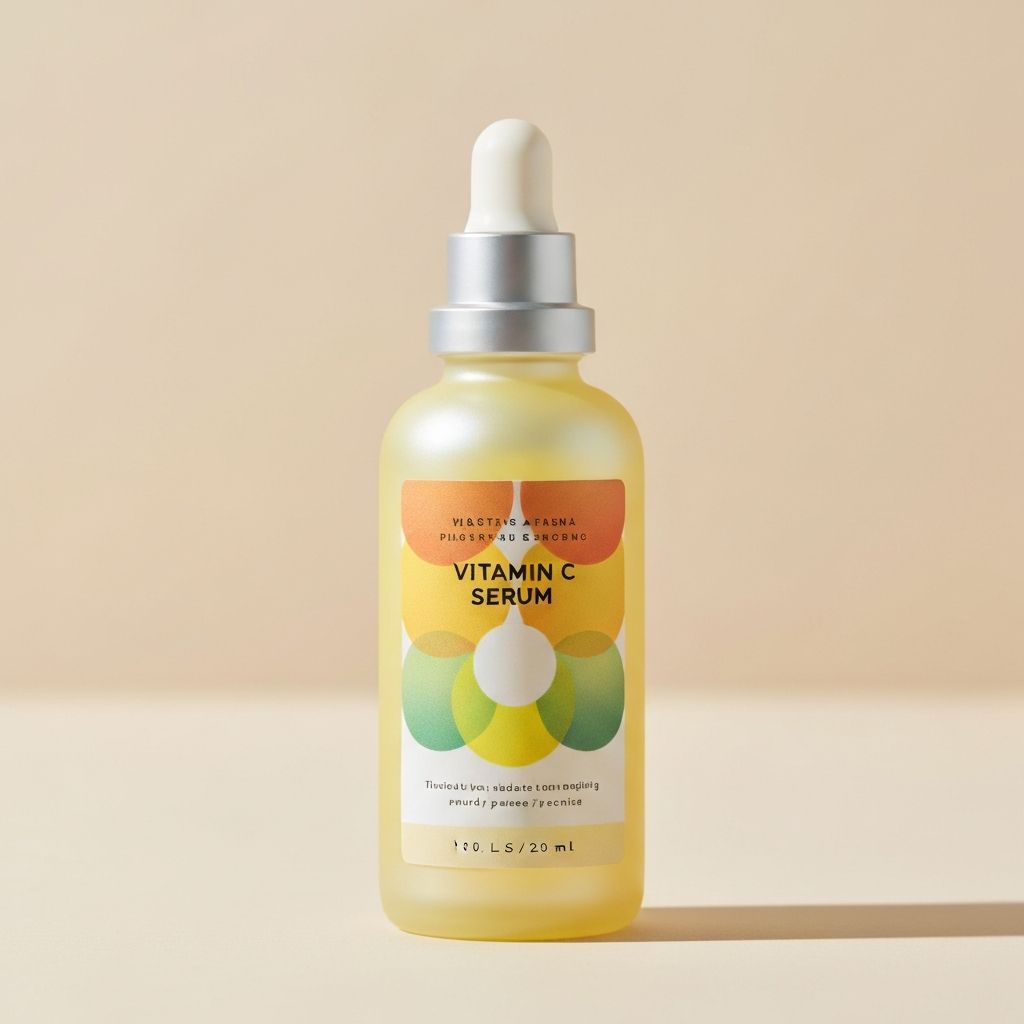
Vitamin C: The Brightening & Antioxidant Powerhouse
Vitamin C is one of the most researched ingredients in skincare, with 88.7% dermatologist agreement for wrinkles and 87.1% for dark spots. Understanding its forms and proper usage is key to getting results.
Pure Form: L-Ascorbic Acid
Stable Derivatives
When L-ascorbic acid is too irritating or unstable for your needs:
| Derivative | Stability | Best For | Notes |
|---|---|---|---|
| Ascorbyl Glucoside | High | All skin types | Proven in vitro for all 3 main benefits |
| Sodium Ascorbyl Phosphate (SAP) | High | Sensitive, oily skin | Good antioxidant |
| Magnesium Ascorbyl Phosphate (MAP) | High | Wound healing | 10% MAP ≈ 5% L-AA |
| 3-O-Ethyl Ascorbic Acid | Very High | Stability-focused | Less studied but promising |
The Gold Standard Formula
15% L-Ascorbic Acid + 1% Vitamin E + 0.5% Ferulic AcidThis combination provides:
How Vitamin C Works
Vitamin C works as a cofactor in collagen synthesis—your skin literally needs it to build new collagen. It also:
How to Use Vitamin C
Application Tips
Signs Your Vitamin C Has Oxidized
Oxidized vitamin C won't harm your skin, but it's no longer effective. Replace it.
Common Questions
Can I use vitamin C with retinoids?
Yes, but it's often easier to use vitamin C in the morning and retinoids at night.
Can I use vitamin C with niacinamide?
Absolutely! The myth that these ingredients cancel each other out has been thoroughly debunked. They complement each other well.How long until I see results?
The Bottom Line
Vitamin C is a morning routine essential. The C+E+Ferulic combination remains the gold standard, but stable derivatives offer good alternatives for sensitive skin or those frustrated by oxidation.
Enjoying this article?
Get weekly skincare insights delivered to your inbox. No spam, unsubscribe anytime.
Sources & References
Tags