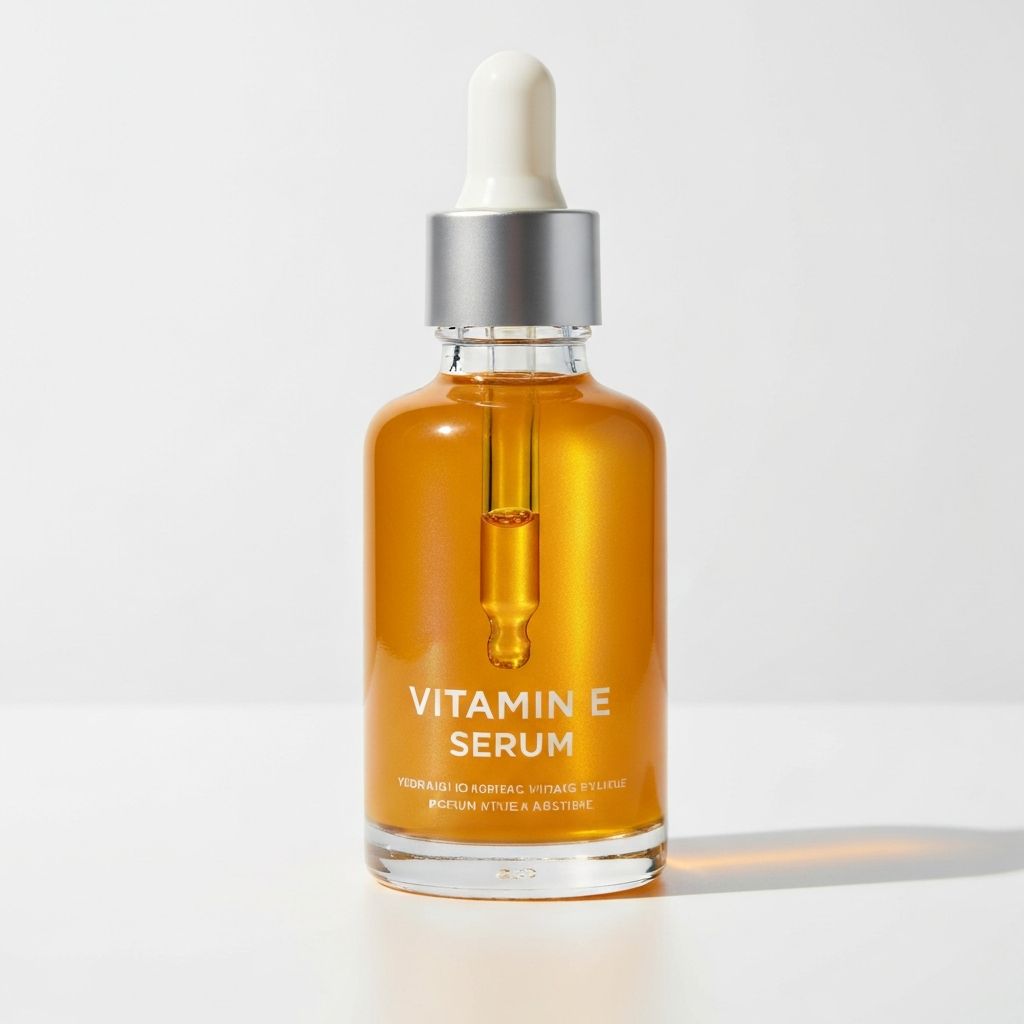
Vitamin E: The Lipid Antioxidant Your Skin Needs
Vitamin E, with 88-92% dermatologist support, is a lipid-soluble antioxidant that protects cell membranes from oxidative damage and enhances photoprotection when paired with Vitamin C.
What is Vitamin E?
Vitamin E refers to a group of compounds, with alpha-tocopherol being the most biologically active form in skin. It's fat-soluble, meaning it protects the lipid-rich cell membranes that form your skin barrier.
Forms of Vitamin E
| Form | Stability | Penetration | Best For |
|---|---|---|---|
| Tocopherol | Less stable | Direct activity | Immediate antioxidant action |
| Tocopheryl Acetate | More stable | Converts in skin | Longer shelf life products |
| Tocotrienols | Very potent | Superior penetration | Advanced formulations |
Key Benefits
1. Lipid Antioxidant Protection
Vitamin E neutralizes free radicals that would otherwise damage cell membranes, preserving skin structure and function.
2. Enhanced Photoprotection
When combined with Vitamin C and ferulic acid, Vitamin E doubles the UV protection of sunscreen alone.
3. Moisture Retention
As an emollient, Vitamin E strengthens the skin barrier, reducing transepidermal water loss (TEWL).
4. Wound Healing Support
Vitamin E supports tissue repair and reduces inflammation, though pure Vitamin E on fresh wounds is not recommended.
The Vitamin C + E Synergy
The combination is more than additive—it's synergistic:
How to Use
Cautions
The Bottom Line
Vitamin E is an essential antioxidant that works best in combination with Vitamin C and sunscreen. Look for stable formulations with both vitamins for maximum photoprotection.
Enjoying this article?
Get weekly skincare insights delivered to your inbox. No spam, unsubscribe anytime.
Sources & References
Tags