
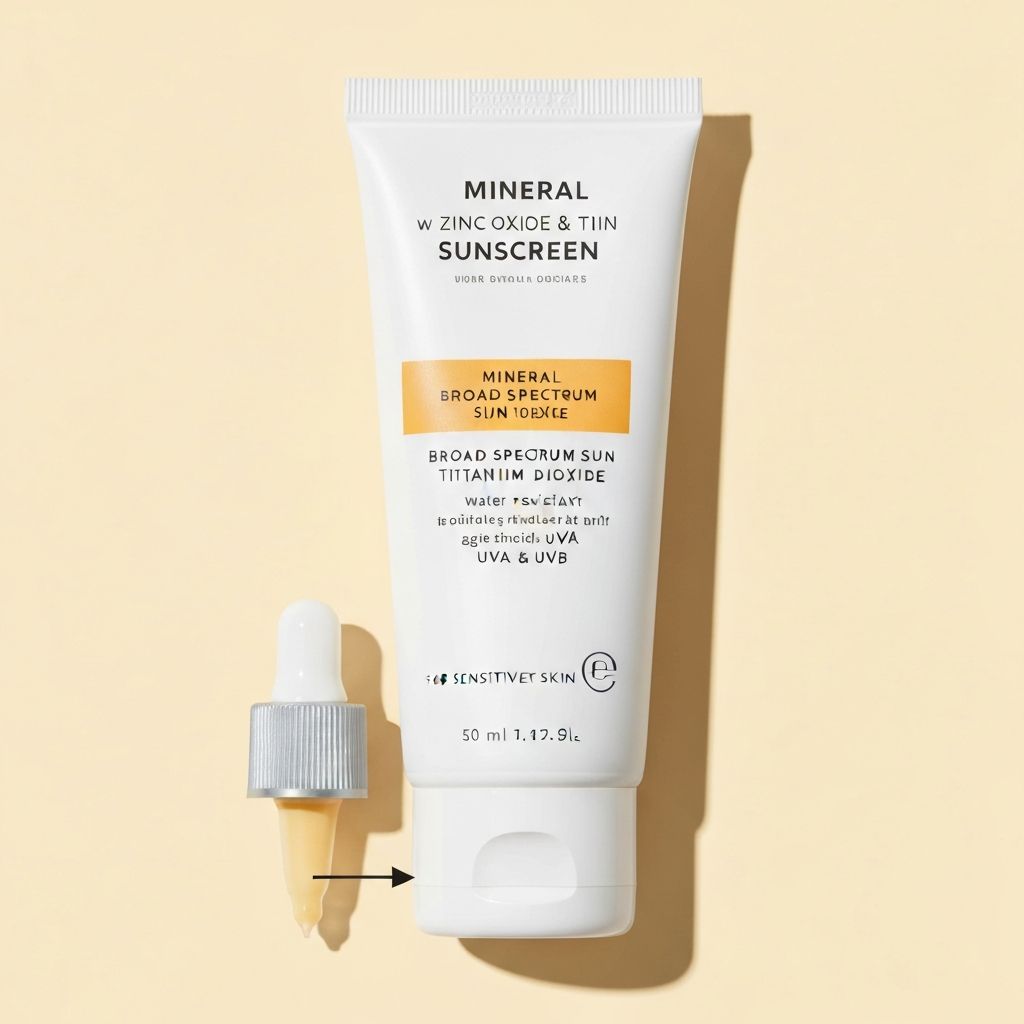
Mineral Sunscreens: Zinc Oxide & Titanium Dioxide Explained
Mineral sunscreens have 98% dermatologist consensus for anti-aging and skin health. They're the foundation of any skincare routine—nothing else matters if you're not protecting your skin from UV damage.
What Are Mineral Sunscreens?
Mineral (also called physical or inorganic) sunscreens use zinc oxide and/or titanium dioxide to protect skin from UV radiation. Unlike chemical sunscreens, which absorb UV rays, minerals primarily reflect and scatter them.
Zinc Oxide vs Titanium Dioxide
| Factor | Zinc Oxide | Titanium Dioxide |
|---|---|---|
| UVA Protection | Excellent (broad) | Limited (UVA II only) |
| UVB Protection | Excellent | Excellent |
| White Cast | More likely | Less likely |
| Sensitivity | Best for sensitive | Good for sensitive |
| Reef Safe | Yes | Yes |
| Standalone Use | Can be sole active | Usually combined with ZnO |
Why Dermatologists Prefer Minerals
1. Broad-Spectrum Protection
Zinc oxide protects against the full UVA spectrum, including UVA I rays that penetrate deepest and cause the most photoaging.
2. Immediate Protection
No 15-20 minute wait required—minerals work as soon as applied.
3. Photostable
Unlike some chemical filters, zinc oxide doesn't degrade in sunlight.
4. Gentle
Minimal irritation potential—ideal for sensitive skin, rosacea, post-procedure.
5. Reef-Friendlier
Non-nano zinc oxide and titanium dioxide are less harmful to marine ecosystems.
Addressing Common Concerns
"Mineral sunscreens leave a white cast"
Modern formulations have improved dramatically:
"Mineral sunscreens feel heavy"
Look for:
"I don't like the texture"
Keep trying different formulas—the best sunscreen is one you'll actually wear daily.
How to Apply Mineral Sunscreen
SPF Numbers Explained
| SPF | UVB Blocked | Real-World Difference |
|---|---|---|
| 15 | 93% | Minimum recommended |
| 30 | 97% | Standard recommendation |
| 50 | 98% | Ideal for extended exposure |
| 100 | 99% | Diminishing returns |
The Bottom Line
Sunscreen is non-negotiable. Find a mineral sunscreen you enjoy using and wear it every single day. Your future skin will thank you.
Enjoying this article?
Get weekly skincare insights delivered to your inbox. No spam, unsubscribe anytime.
Sources & References
Tags